
Should I repair or replace my deck?
Deck Replacement or Resurfacing in Raleigh & Durham, NC
All starts with the inspection
You can’t determine whether a deck should be resurfaced just by looking at a photograph of the top.
Our representatives meet with you at your home and evaluate the existing deck conditions.
We want to understand:
What can safely stay?
Sound framing and materials we can build on.
What should be reinforced?
Joists, posts or connections that need added strength.
What needs to be replaced?
Boards, rails or structure past the point of saving.
Is resurfacing the right investment?
An honest answer before you spend a dollar.
Request Your Free Consultation
Maybe you simply want to replace aging wood with new wood.
Maybe you want to convert an old wood deck into a low-maintenance composite deck.
Maybe you want new railings.
Maybe you want to change the stairs.
Or maybe the structure has simply reached the point where starting over makes more sense.
Our job is to help you understand those options.
Resurface or Rebuild?
It Starts With the Structure — Not the Deck Boards
Faded decking.
Splintering boards.
Loose railings.
Old stairs.
Peeling stain.
Outdated materials.
But when we evaluate a deck, we’re just as interested in the parts you can’t see from above.
Your deck is a structural component of your home.
Before installing thousands of dollars of new wood or composite decking, we want to understand the condition of the structure supporting it.
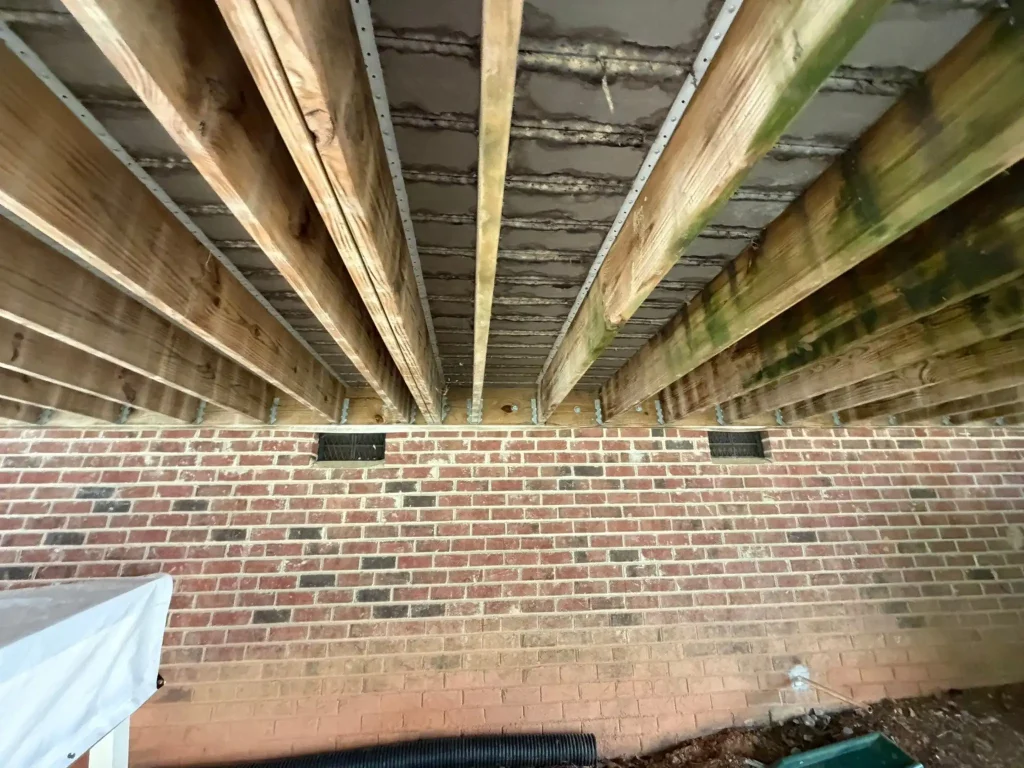
Signs Your Deck May Need to Be Replaced
01
Joists support the decking surface and transfer loads into the rest of the deck structure.
Over time, moisture can collect around fasteners, underneath decking boards, or in areas without proper water management.
If joists are significantly deteriorated, soft, cracked, or rotting, installing new decking over them may not make sense.
02
The beams underneath your deck carry tremendous loads.
If those structural members have substantial rot or deterioration, they need to be addressed before a new deck surface is installed.
03
Deck posts transfer the weight of the structure toward the foundation and footings.
We inspect posts for visible deterioration, movement, questionable connections, and other conditions that could affect the deck’s long-term performance.
04
Joist hangers, bolts, brackets, screws, nails, structural connectors, and other hardware all play a role in keeping a deck together.
On an older deck, hardware can loosen, corrode, pull away, or simply no longer provide the type of connection we would want to see on a modern deck project.
05
If sections of the deck feel soft, bounce excessively, move when people walk across them, or visibly sag, there may be more happening underneath the decking boards.
One of the most important areas of many attached decks is where the deck connects to the home.
The ledger, structural fasteners, flashing, and surrounding materials all deserve careful attention.
Water intrusion or improper attachment in this area can become a much bigger concern than worn-out decking boards.
What Is Deck Resurfacing?
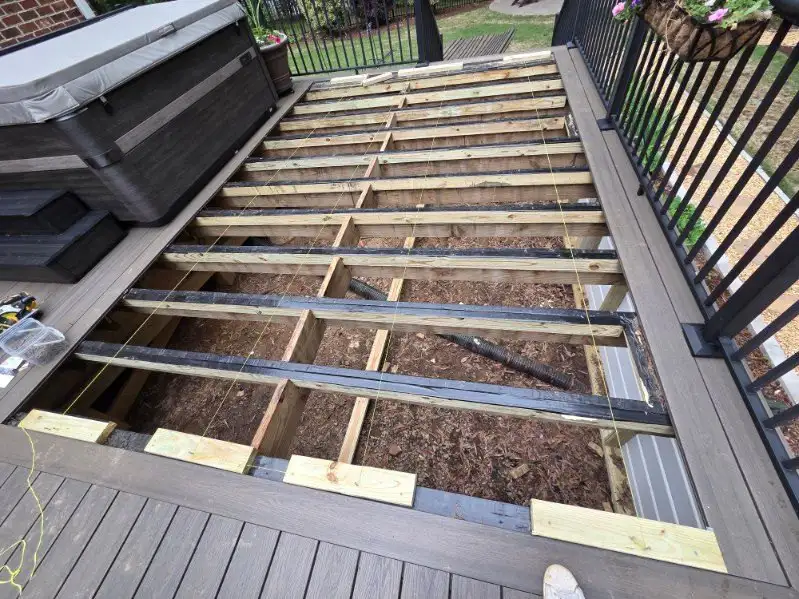
Deck resurfacing generally means keeping usable portions of an existing deck structure while removing and replacing the visible decking components.
- Decking boards
- Fascia
- Stair risers
- Selected framing components
- Hardware
- Railings
- Stair treads
- Trim
- Damaged joists
- Blocking
A resurface can dramatically change the appearance of an older deck without requiring the entire structure to be demolished and rebuilt.
For homeowners with a properly constructed deck frame that remains in good condition, it can also be a more budget-friendly alternative to a complete deck replacement.
But there is an important catch:
The existing structure has to be worth saving.
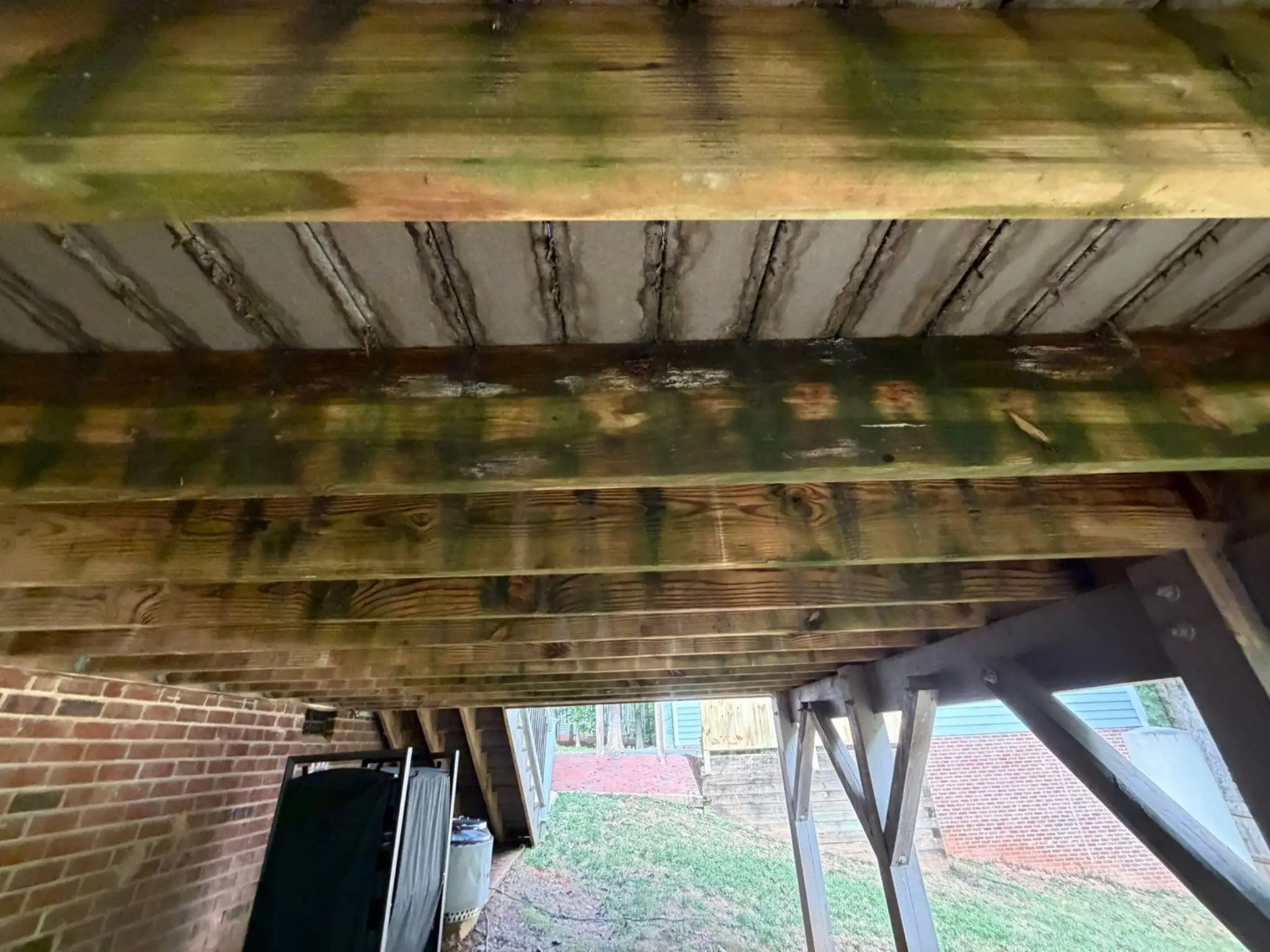
Not Every Deck Should Be Resurfaced
Resurfacing is attractive because it can reduce the amount of demolition, framing, material, and labor required.
But saving money only makes sense if the finished product is going to last.
If the band boards are deteriorating…
If the beams are rotting…
If the posts are failing…
If the framing has major structural problems…
If critical connections are questionable…
Then resurfacing may simply postpone the inevitable.
You could end up spending significant money installing a beautiful new deck surface over framing that needs to be replaced several years later.
Then the new decking may have to come back off.
There’s an old saying we believe applies perfectly to construction:
The most expensive project you can do is the one you have to do twice.
Our goal isn’t simply to find the cheapest way to make an old deck look new. Our goal is to determine the right way to make the deck perform for years to come.
We Don’t Believe Resurfacing Should Mean Cutting Corners
When an existing deck frame is worth preserving, we don’t simply remove the old boards and start covering it back up.
An older frame needs to be prepared for its new surface.
That preparation can make an enormous difference in how the finished deck looks and feels.
Reinforcing Existing Joists
- Reinforce the existing structure
- Help correct uneven framing
- Create a flatter deck surface
- Improve the finished feel of the deck
- Create a better fastening surface
- Reduce movement
- Provide fresh lumber for new fasteners
One technique we frequently use is sistering joists.
Sistering involves installing additional treated lumber alongside an existing joist.
Why do this?
Over the years, older framing can develop crowns, dips, inconsistencies, movement, or deterioration around previous fastener locations.
When you’re investing in a new deck surface, what happens underneath those boards matters.
16″ → 8″
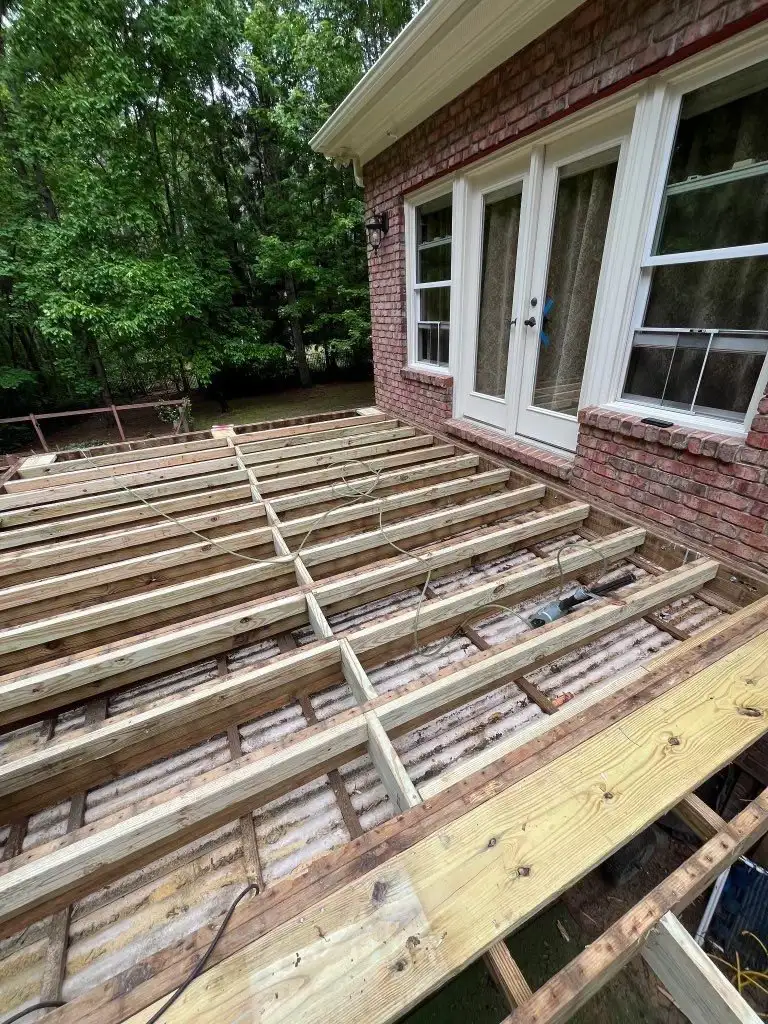
Upgrading Joist Spacing for Composite Decking
Many older wood decks throughout Raleigh, Durham, Cary, Holly Springs, and the Triangle were framed at approximately 16 inches on center.
Depending on the decking product, board orientation, existing framing conditions, and the finished feel we’re trying to achieve, additional framing may be recommended.
On many Elite Xteriors resurfacing projects, we may install an additional 2×8 or 2×10 between existing joists.
For example:
An older deck framed approximately 16 inches on center can receive an additional joist between the existing joists, creating approximately 8-inch-on-center framing.
That is a significant framing upgrade.
The tighter framing can create a more rigid surface and provides additional support underneath the new decking.
Not every product or project requires the same joist spacing, so our team evaluates the manufacturer’s installation requirements, deck layout, existing structure, and project conditions before determining the appropriate framing plan.
That’s particularly important when replacing traditional wood decking with modern composite decking.
We aren’t interested in simply asking:
What’s the minimum we can get away with?
Deck Construction Has Changed
Many older decks were constructed using large numbers of traditional nails.
Some of those connections may still be performing perfectly well.
Others may have loosened, backed out, corroded, or deteriorated over years of exposure to the weather.
Modern deck construction gives us access to a wide range of purpose-built exterior and structural fastening systems.
Depending on the application, our crews use appropriate deck screws, structural screws, bolts, joist hangers, brackets, connectors, and manufacturer-approved fastening systems designed for the connection being made.
The fastening method matters because a deck isn’t simply a collection of lumber.
- The decking needs to connect properly to the joists.
- The joists need to connect properly to the beams and ledger.
- The beams need to transfer loads properly into the posts.
- And the posts need to transfer those loads toward the foundation.
Wood or Composite
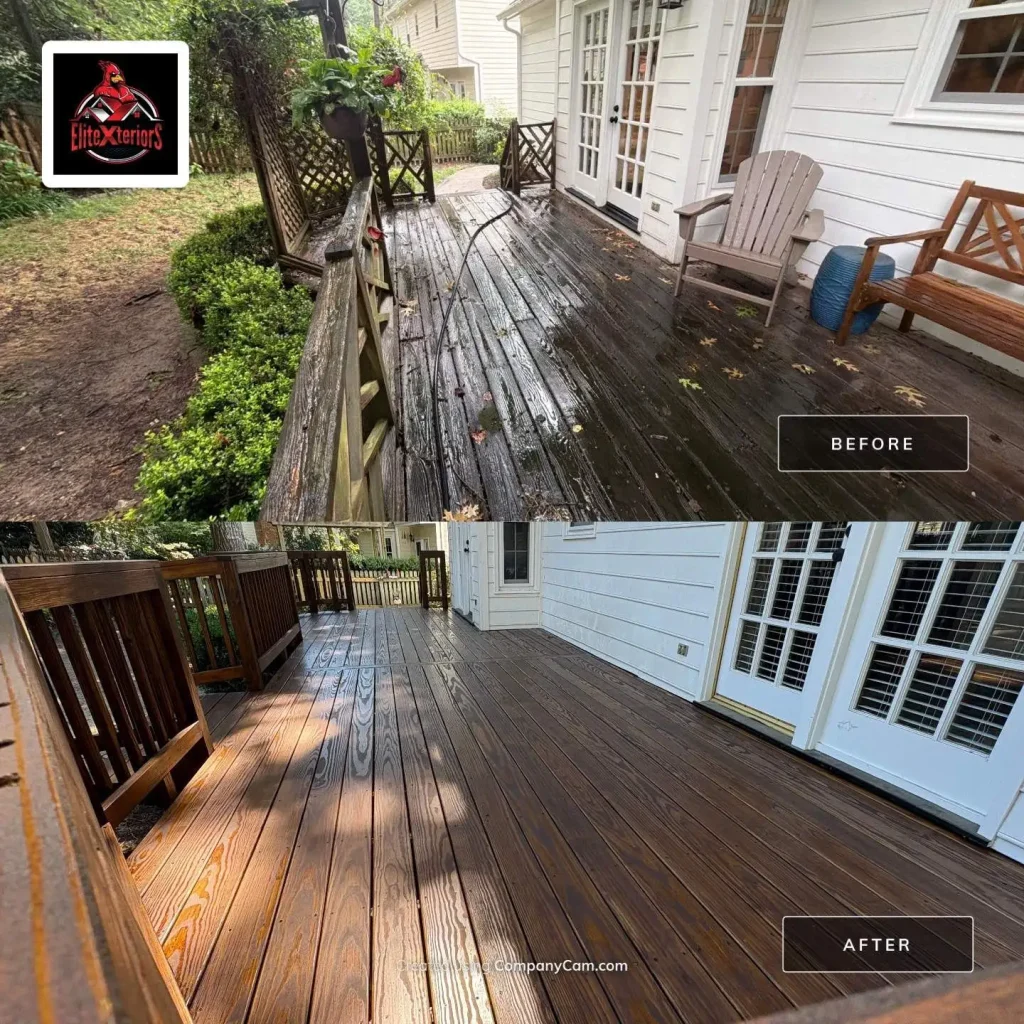
Bring Back the Natural Look of a Wood Deck
Composite isn’t the only option for resurfacing an existing deck.
For homeowners who love the natural look and feel of real wood, we also offer wood deck resurfacing.
A newly resurfaced wood deck can completely transform an older backyard.
Beautiful lumber, clean lines, new railings, fresh stairs, and upgraded trim can make a decades-old deck look completely different.
Wood also gives homeowners flexibility with future staining and finishing.
If you want the warmth and traditional character of real wood, our team can help you evaluate wood decking options and determine whether resurfacing your existing deck frame makes sense.
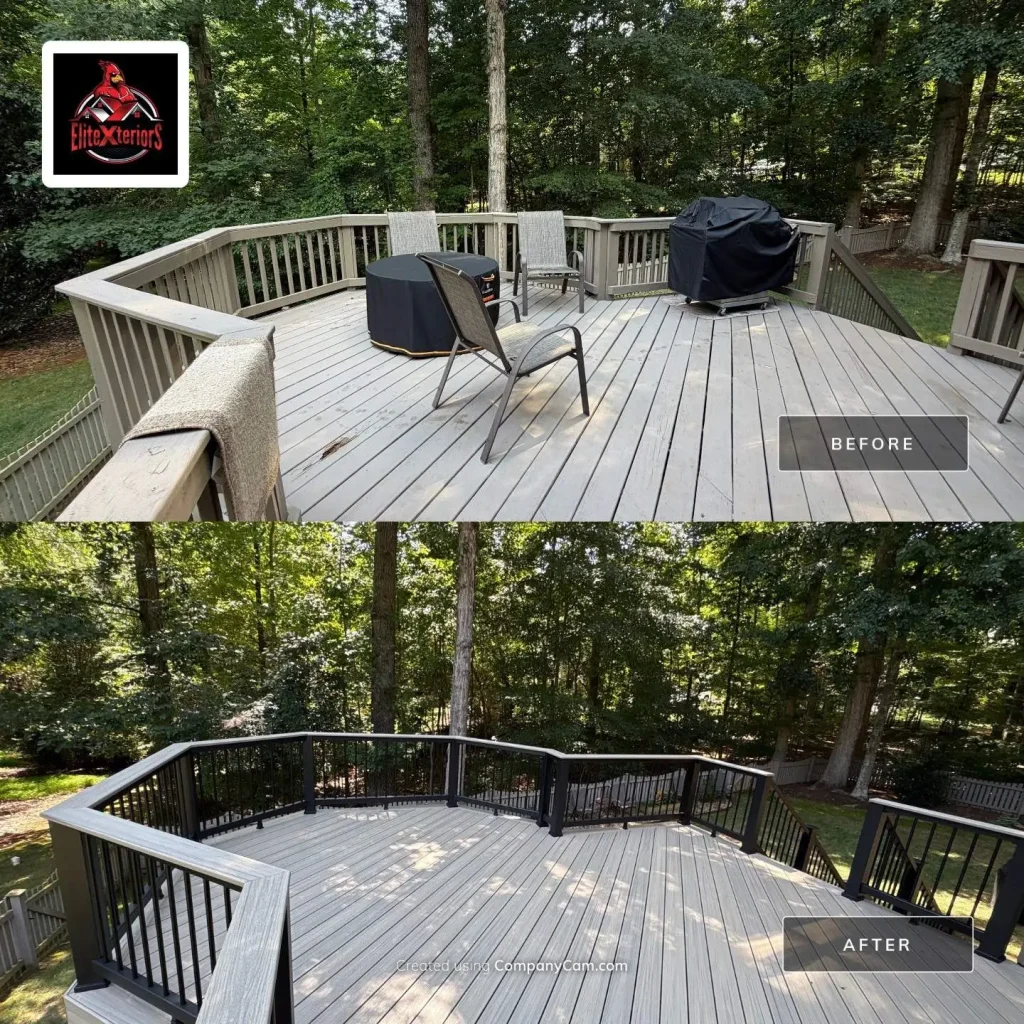
Upgrade an Older Wood Deck to Lower-Maintenance Composite
One of the most common reasons homeowners consider deck resurfacing is because they’re tired of maintaining an aging wood surface.
Cleaning. Staining. Splinters. Cracked boards. Fading. Replacing individual boards.
A composite deck resurface can give homeowners a completely different maintenance experience while transforming the appearance of the backyard.
- Color
- Appearance
- Budget
- Deck layout
- Long-term priorities
- Board profile
- Maintenance
- Railing selections
- Existing framing
But converting a wood deck to composite involves more than simply removing wood boards and installing composite boards.
The substructure needs to be carefully evaluated and prepared for the new decking system.
That’s where a professional deck resurfacing contractor can make a major difference.
When a Complete Deck Replacement Makes More Sense
Sometimes the best decision is to start over.
If too much of the existing structure needs repair, continually reinforcing an aging deck may stop making financial sense.
A complete deck replacement gives us the opportunity to remove the existing structure and rebuild the deck from the foundation up.
- New footings
- New beams
- New ledger connections
- New structural hardware
- New railings
- New fascia and trim
- New structural posts
- New joists
- New flashing
- New decking
- New stairs
A replacement also gives you an opportunity to rethink the deck entirely.
Maybe the old deck was too small. Maybe the stairs were in the wrong location. Maybe you want a wider staircase. Maybe you want to convert from wood to composite. Maybe the railing blocks your view. Maybe you want more room for a grill and dining table. Maybe you want a completely different layout.
Replacing an older deck doesn’t mean you have to rebuild exactly what was there before.
It can be an opportunity to create something better.
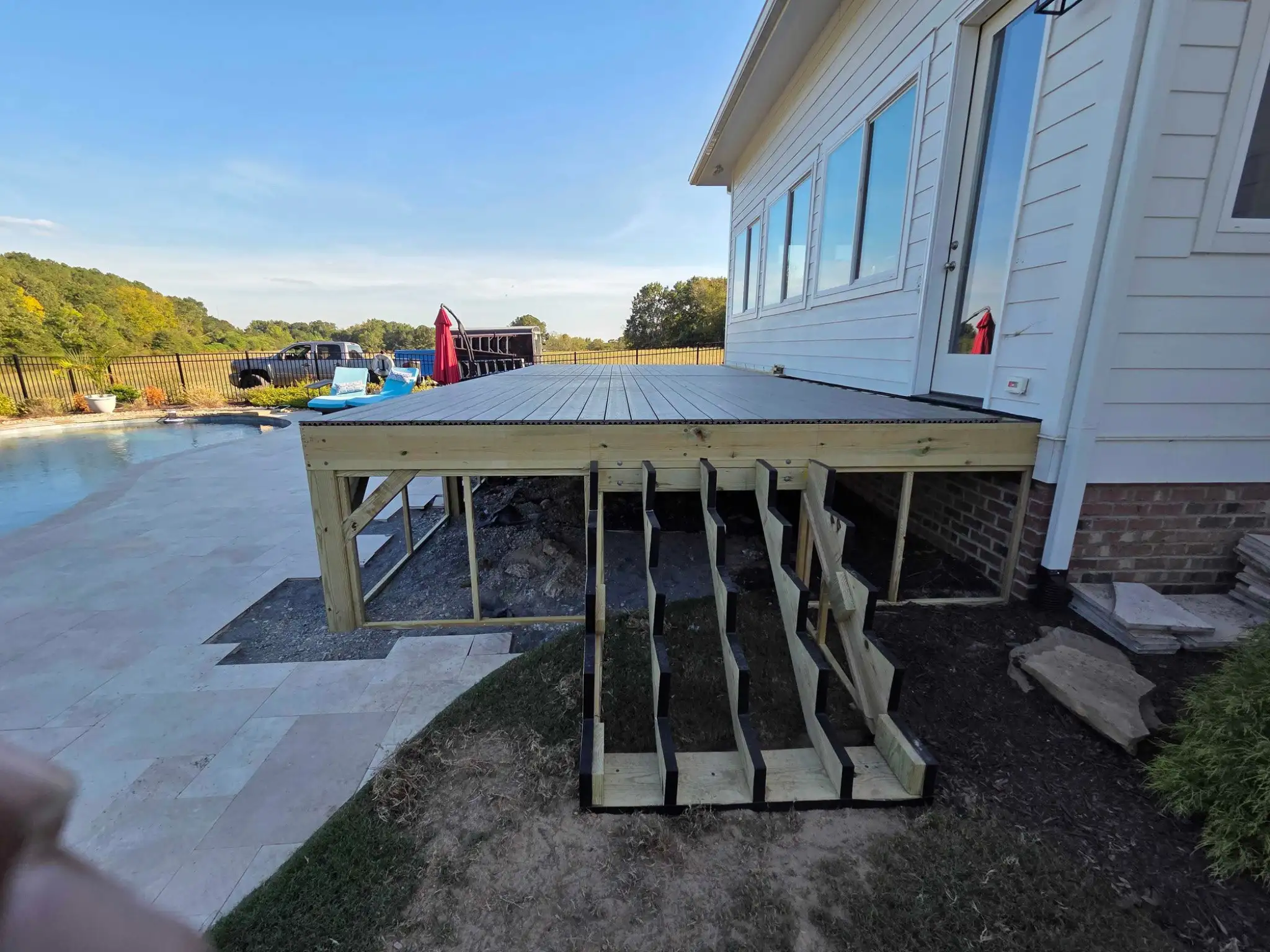
Here’s How We Think About It
- The primary framing remains structurally sound
- Posts and beams are in good condition
- The deck layout still works for your home
- You primarily want new decking and railings
- Existing framing can reasonably be repaired or reinforced
- The deck can accommodate the new decking system
- You want a more budget-conscious renovation
- Joists have extensive rot
- Beams or drop girders are deteriorated
- Support posts are failing
- Major structural connections are questionable
- The existing layout no longer works
- You want to significantly enlarge or redesign the deck
- Too much of the existing structure would need repair
- The remaining life of the structure doesn’t justify installing a premium new surface over it
From the First Inspection to the Final Walkthrough
A deck renovation involves a lot of decisions.
We built our process to help homeowners understand what’s happening at every stage.
01
Tell us what’s happening with your existing deck.
Are the boards deteriorating? Are you tired of maintaining wood? Does the deck feel unstable? Are the railings loose? Do you want composite decking? Are you trying to determine whether resurfacing is possible?
We’ll talk through your project and schedule an on-site consultation.
One of our experienced deck representatives meets you at your home.
We’ll look at the existing structure and talk through what you’re hoping to accomplish.
We evaluate the visible condition of major deck components and begin determining whether the project is better suited for resurfacing or replacement.
This is one of the most important parts of a resurfacing project.
We identify framing that can potentially remain, areas requiring reinforcement, and components that should be replaced.
If a complete rebuild makes more sense, we’ll explain why.
Once we understand the structure, we’ll help you select the materials that will transform the deck.
Depending on the project, that can include:
- Wood decking
- Composite railings
- Wood railings
- Fascia
- Contrasting decking colors
- Composite decking
- Aluminum railings
- New stairs
- Picture-frame borders
- Other finishing details
Before the project moves into construction, important details are verified again.
We believe in a simple principle:
Measure twice. Cut once.
Our team reviews project measurements, materials, structural notes, railing selections, stair details, access considerations, and other important information before construction begins.
Depending on the scope of the deck replacement or structural modifications, permitting may be required.
Our team manages the permitting process for applicable projects and coordinates required municipal inspections.
For a resurface, we remove the components being replaced so the underlying structure can be accessed.
For a complete rebuild, the existing deck is demolished so reconstruction can begin. Once old decking is removed, additional framing conditions may become visible.
If we discover something that couldn’t reasonably be seen beforehand, we communicate with you before moving forward.
This is where quality resurfacing becomes very different from simply replacing deck boards.
Depending on the project, work may include:
- Sistering joists
- Replacing deteriorated framing
- Correcting framing inconsistencies
- Rebuilding stairs
- Replacing posts
- Adding intermediate joists
- Installing new blocking
- Upgrading hardware
- Replacing beams
- Addressing structural connections
If it’s a full deck replacement, we construct the new deck framing according to the project design and applicable requirements.
Once the framing is prepared, our crews install the new decking, railings, stairs, fascia, trim, and finishing details.
Whether you’ve chosen wood or composite, the goal is the same:
A finished deck that looks great and feels solid underneath your feet.
Once construction is complete, we walk the finished project with you.
You’ll have an opportunity to review the work, ask questions, and identify anything that still needs attention.
We want the deck we deliver to be the deck you expected us to build.
What You Can’t See Matters
A homeowner naturally focuses on how the finished deck looks.
We understand. That’s the exciting part.
But some of the most important work on your deck will eventually disappear underneath the decking boards.
A homeowner naturally focuses on how the finished deck looks.
We understand. That’s the exciting part.
But some of the most important work on your deck will eventually disappear underneath the decking boards.
Once the decking goes down, most people will never see those details again.
We will.
That’s why they matter to us.
A high-quality deck replacement or resurfacing project shouldn’t only photograph well the day construction ends.
It should be built with the goal of performing well years later.
Built Above the Minimum
Building codes and manufacturer installation instructions establish important requirements for deck construction. We view those requirements as the starting point.
When an existing deck is worth resurfacing, we look for ways to create a stronger, flatter, more durable platform for the new surface.
That might mean additional framing. It might mean sistering joists. It might mean replacing questionable lumber instead of covering it. It might mean additional blocking. It might mean upgraded connections.
Doing more work underneath the deck isn’t always the easiest way to resurface a deck. But easy isn’t the goal.
Doing it right is.
Raleigh, NC
Older Raleigh homes can have decks constructed using different framing methods, materials, and hardware depending on when the home was built.
Our team evaluates the deck that’s actually behind your house rather than assuming every project should receive the same solution.
Whether you’re considering a new wood surface, a low-maintenance composite deck, or a complete deck replacement, we’ll help you understand your options.
Durham, NC
We build both wood and composite decks and can help determine whether your existing framing should be preserved, reinforced, partially replaced, or removed entirely.
Our team also coordinates permitting when required for your project.
Holly Springs, NC
Whether you’re replacing old pressure-treated decking, upgrading to composite, changing your railing system, or completely rebuilding the structure, we’ll evaluate your existing deck before recommending the right approach.
Deck Builder Serving Raleigh, Durham & the Triangle
and surrounding North Carolina communities.
If you’re searching for a deck builder near you, our team can inspect your existing deck, explain your options, and help you decide whether resurfacing or complete replacement is the better investment.
Frequently Asked Questions About Deck Replacement Or Resurfacing
Can an old deck be resurfaced?
Yes, many older decks can be resurfaced if the underlying structure remains in suitable condition.
The joists, beams, posts, ledger, hardware, stairs, and other structural components should be evaluated before new decking is installed.
If significant structural deterioration exists, a partial or complete rebuild may be the better option.
Is resurfacing a deck cheaper than replacing it?
Generally, resurfacing can require less material and labor because usable portions of the existing structure remain in place.
However, the final cost depends on the condition of the framing, deck size, decking material, railing selection, stairs, repairs, and other project details.
The most important consideration isn’t simply which option costs less today. It’s which option represents the better long-term investment.
Can you put composite decking over an existing wood deck frame?
Potentially, yes.
If the existing framing is structurally suitable, properly prepared, appropriately spaced for the selected decking system, and capable of supporting the new installation, composite decking can be installed during a resurfacing project.
Our team evaluates the existing frame before recommending that approach.
Do you reinforce the framing when you resurface a deck?
Depending on the existing deck, yes.
Our resurfacing process may include sistering existing joists, adding intermediate joists, replacing deteriorated lumber, adding blocking, or making other framing improvements before the new deck surface is installed.
What does sistering a deck joist mean?
Sistering means installing an additional piece of framing alongside an existing joist.
This can be used to reinforce framing, create a better fastening surface, help correct uneven areas, or support the new deck surface depending on project conditions.
Can you change a wood deck to composite?
Yes.
Converting an older wood deck to composite decking is a very common resurfacing project.
Before making the conversion, we evaluate the existing framing and determine what preparation or reinforcement should be completed before the composite boards are installed.
Can you resurface a deck with new wood?
Absolutely.
For homeowners who prefer the natural appearance of wood, a wood deck resurface can give an aging deck an entirely new look while preserving usable portions of the existing structure.
What if you find rot after removing the old deck boards?
Removing old decking can expose framing conditions that weren’t visible during the initial inspection.
If unexpected deterioration is discovered, our team communicates with you and determines what repairs or replacement should be completed before new decking is installed.
We don’t believe structural problems should simply be covered back up.
Should I replace my entire deck if some joists are rotting?
Not necessarily.
A small amount of localized deterioration may be repairable.
Extensive deterioration throughout the joists, beams, posts, ledger, or other major structural components can make complete replacement a better investment.
The right answer depends on the condition of the individual deck.
Can I make my deck larger during a replacement?
Yes.
A complete deck replacement can be an excellent opportunity to redesign the space.
Homeowners frequently change deck dimensions, stair locations, railings, materials, and other features rather than rebuilding the exact same deck.
Do you handle deck permits?
For projects requiring permits, our team coordinates the permitting process and applicable inspections.
Requirements can vary depending on the municipality and scope of work.
Do you install both wood and composite decks?
Yes.
We offer both wood and composite deck replacement and resurfacing options.
Our team can help you compare appearance, maintenance, longevity, budget, and other considerations before selecting a material.
How do I know whether my deck is safe?
If you’re concerned about significant rot, loose railings, movement, deteriorated structural members, failing hardware, or other conditions, the deck should be evaluated before assuming it’s safe to continue using.
A professional on-site evaluation is the best starting point for understanding the visible condition of the structure and determining what should happen next.
Don’t Spend Money on the Same Deck Twice
A new deck surface can completely transform your backyard.
But the beautiful boards on top aren’t the whole project.
What matters just as much is what they’re attached to.
At Elite Xteriors NC, our deck replacement and resurfacing process starts with the structure.
We evaluate the existing deck. We determine what can stay. We identify what needs reinforcement.
And when a structure has reached the end of its useful life, we’ll explain why rebuilding may be the better decision.
Because whether you choose a complete deck replacement or a more budget-friendly deck resurface, the goal should be the same:
Build it correctly so you don’t have to do it again.
Let’s Take a Look at Your Deck
If your current deck is aging, deteriorating, difficult to maintain, or simply ready for an upgrade, let our team help you understand your options.
Schedule your free on-site consultation with Elite Xteriors NC and find out whether your deck is a candidate for resurfacing or whether a complete replacement makes more sense.
Request Your Free Consultation
Explore Related Services
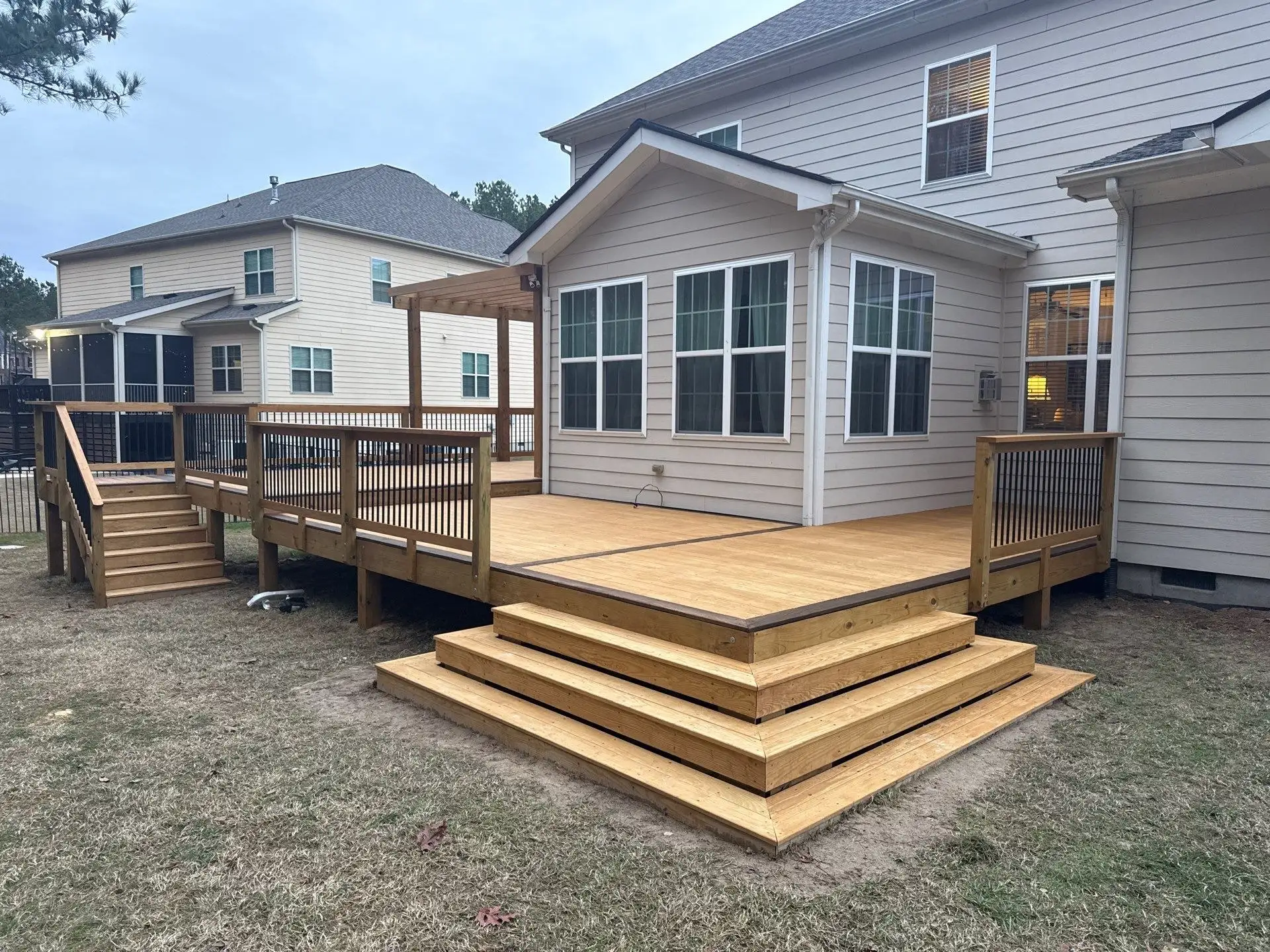
Custom Deck Design & Construction
Your Backyard Is Your Oasis. Your Deck Should Be Too.